

Welcome to the May 2026 edition of our Malaadhu Thar’wah newsletter.
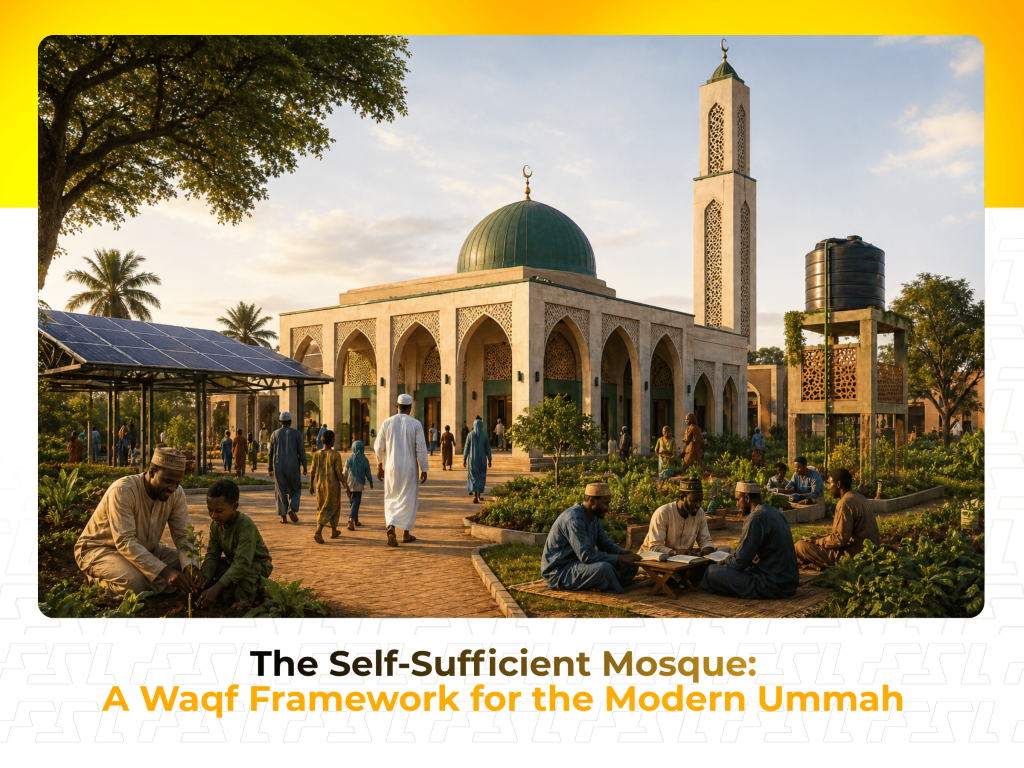
The mosque occupies a central position in Muslim life. It is a place of worship, spiritual purification, education, and moral development. However, maintaining a mosque requires consistent financial resources to cover essential needs such as electricity, water supply, sanitation, maintenance, and the welfare of Imams and staff.
In many communities, mosques rely heavily on frequent donations or emergency fundraising (“fire brigade” approaches), which can burden worshippers and create uncertainty. To address this challenge, there is a need for a structured, sustainable, and dignified financial system that ensures long-term stability without constant solicitation.
The most effective solution is the establishment of Waqf (Endowment).
Meaning of Waqf
Waqf refers to a perpetual charitable endowment dedicated solely for the sake of Allah (SWT), where the principal asset remains intact and cannot be inherited, sold, or consumed. Only the benefits or returns generated from the waqf are utilized for public good.
Unlike temporary charity (sadaqah), waqf is a long-term, sustainable system designed to continuously support religious and social institutions. It is a Prophetic tradition established to promote self-reliance and economic stability within the Muslim community.
Why Mosques Must Establish Waqf
Establishing waqf enables mosques to:
- Eliminate dependence on begging or emergency donations
- Secure stable funding for utilities and operational expenses
- Provide salaries and welfare for Imams, scholars, and staff
- Ensure long-term sustainability and development
- Promote financial independence and dignity
1. Establish a Trustworthy Governance Structure
Create two key bodies:
- Board of Trustees (BOT) (5–9 members)
- Management Committee (5–9 members)
- Members should be individuals of integrity, competence, and accountability
2. Develop Waqf Policies and Operational Framework
Clearly define:
- Methods of receiving waqf contributions
- Investment guidelines (Shariah-compliant)
- Utilization of returns
- Reporting and accountability procedures
3. Identify Sustainable Waqf Assets
Select viable income-generating ventures such as:
a). Commercial Waqf
- Rental shops and plazas
- Transportation services (tricycles, taxis)
- Small-scale enterprises (printing, milling, ice production)
b). Real Estate Waqf
- Residential buildings
- Rental rooms and shops
- Agricultural Waqf
- Farmland (rain-fed or irrigated)
- Agricultural equipment
c). Service-Based Waqf
- Water supply systems
- Phone charging stations
- Event spaces for rent
4. Open a Dedicated Waqf Bank Account
- All waqf funds must be managed through a separate account to ensure transparency and proper financial control. (It’s good to be in free interest bank and conventional banks).
5. Promote Public Awareness
Educate the community that waqf is not begging, but a form of perpetual charity. Clearly distinguish between:
- Waqf (endowment)
- Regular donations (temporary/emergency sadaqah)
6. Issue Waqf Certificates
Provide each donor with:
- Official receipt or certificate
- Appreciation letter with prayers (du‘a)
- Clear explanation of the impact of their contribution
7. Invest Responsibly
- The waqf capital must remain untouched. Only profits and returns should be utilized.
8. Utilize Returns for Mosque Operations
Waqf proceeds should cover:
- Utilities (electricity, water)
- Maintenance and cleaning
- Renovation and development
- Salaries of Imams and staff
- Welfare initiatives such as Qard al-Hasan (interest-free loans)
9. Ensure Transparent Financial Reporting
Regularly present:
- Income reports
- Expenditure reports
- Growth and performance updates
- Reports on social financing initiatives (e.g., Qard al-Hasan)
10. Expand Continuously
Adopt policies to grow the waqf, such as:
- Allocating 5–10% of general donations to waqf
- Reinvesting part of profits into new ventures
11. Legal Registration and Compliance
Register with relevant authorities such as:
- Corporate Affairs Commission (CAC)
- SCUML (EFCC compliance)
- State waqf/endowment agencies
Benefits of Mosque Waqf
- Eliminates the need for public solicitation
- Ensures financial stability and sustainability
- Enhances transparency and accountability
- Supports religious leadership and staff welfare
- Strengthens Islamic education and community services
Conclusion
Waqf represents a time-tested, Sunnah-based model for sustainable development within the Muslim Ummah. When properly implemented, it transforms mosques into self-reliant institutions capable of serving their communities without financial strain or dependence on constant appeals.
Historically practiced by the Salaf and still evident in many parts of the Muslim world today, waqf remains one of the most powerful tools for long-term community empowerment.
I call upon mosque leaders, organizations, and communities to embrace this model so that our houses of worship can become centers of stability, dignity, and continuous benefit.
May Allah (SWT) guide us and grant success in this noble endeavor. Ameen.
Abbas Adam Abba
Chairman, Alburhan Waqf Initiative, Kano – Nigeria
Tel: 08038569777
Email: abbasadamrz@gmail.com
2026 / 1447 AH

Fiduciary Services Limited is committed to assisting Muslim clients in aligning their estate and business affairs with Islamic principles. Contact us today to ensure your legacy reflects your faith and values.
Get in touch with one of our professionals today by sending an email to contact@fiduciaryservicesltd.com. To book a FREE CONSULTATION click link: bit.ly/4sjQDLV
Shukran Jazeelan for reading.
Mercy Edukugho-Aminah
mercyaminah@fiduciaryservicesltd.com
+234 803 726 5961