

Assalamu Alaikum wa Rahmatullahi wa Barakatuh
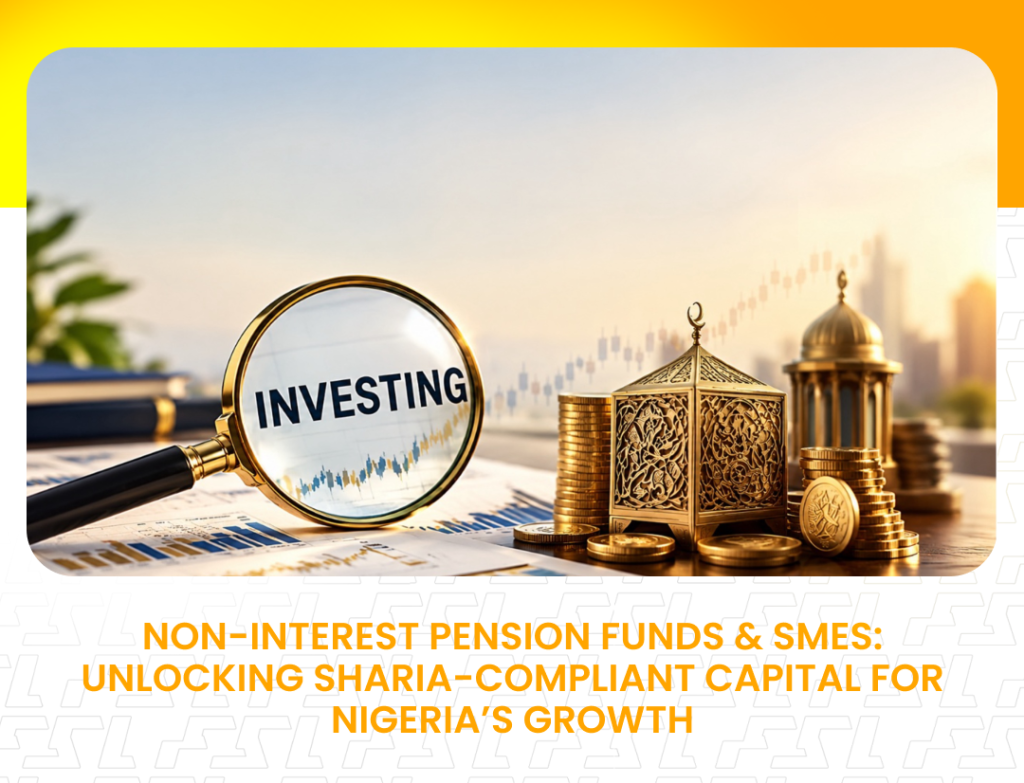
Nigeria has no shortage of entrepreneurs with ideas, businesses with potential, or workers saving for retirement. What we have is a question of connection: how can the wealth being accumulated for tomorrow help build the businesses Nigeria needs today? For Muslim contributors, there is another important consideration—can this be done in a way that is consistent with the principles of Sharia?
As Nigeria’s non-interest finance and pension sectors continue to evolve, the possibility of directing Sharia-compliant pension capital towards Small and Medium-sized Enterprises (SMEs) presents an intriguing opportunity. But between the idea and its implementation lies a complex web of regulation, investment structures, risk and market capacity.
This edition of the Maladhu Thawar Newsletter explores the prospects, limitations, and possible pathways for unlocking Nigeria’s non-interest pension funds to support SMEs.

The Investment Framework: Prospects and Limitations
The core principles of non-interest finance create a natural alignment with SME investment but also impose specific constraints.
Key Prospects:
- Alignment with Ethical & Asset-Backed Principles: Non-interest finance prohibits interest and requires tangible, asset-backed investments. This makes equity partnerships (like Musharakah) or profit-sharing agreements ideal for investing directly in SMEs, aligning perfectly with financing needs.
- Potential for High Social & Economic Impact: Directing patient capital to SMEs supports job creation, economic diversification, and “Made in Nigeria” products. For pension funds, this aligns with growing calls for using pension capital as a catalyst for national economic growth.
- New Regulatory Momentum: Recent 2025 pension reforms allow Pension Fund Administrators (PFAs) to diversify into new asset classes like agricultural funds and commodities. Concurrently, the Securities and Exchange Commission (SEC) plans to incentivize SME listings and create new investment vehicles, which could eventually include Sharia-compliant structures.
Key Limitations:
- Extreme Scarcity of Compliant Instruments: The biggest hurdle is the lack of investment vehicles. The entire non-interest pension fund sector (Fund VI) was worth just ₦45.6 billion in mid-2023, dwarfed by the over ₦17 trillion in total pension assets. The supply of sukuk (Islamic bonds) and Sharia-compliant equities is limited. There are currently no standardized, securitized channels for non-interest funds to flow into SMEs.
- High Due Diligence & Risk-Management Burden: Each SME investment requires rigorous ethical screening to ensure compliance and extensive due diligence to assess viability. This is resource-intensive compared to buying standardized government securities.
- Liquidity and Transparency Concerns: SME investments are typically illiquid and lack the transparency of listed companies. This conflicts with a pension fund’s need for portfolio stability and clear, regular reporting for subscribers.
- Non-Interest Funds Today: Currently, these funds are primarily invested in government-issued sukuk and a limited pool of Sharia-compliant equities. The CEO of Access Pensions cited the annual sukuk issuance by the Debt Management Office (DMO) as the “mainstay” of their non-interest portfolio.
- Regulatory Capacity for SMEs: The new 2025 pension rules do not explicitly mention SME investment. However, they reduce mandatory holdings in government securities and allow investments in agriculture and commodities. This creates a regulatory pathway for future SME-linked products if they are structured as securitized funds or bonds.
- A Precedent for the Region: A blueprint exists in Ghana, where a collaborative initiative is unlocking local pension funds for SME growth. Their model uses a catalytic “Fund of Funds” to de-risk investments for pension trustees and provides intensive capacity building. Nigeria would need a similar, large-scale collaborative effort.
For this investment avenue to become viable, structured intermediation is essential. Here are potential pathways, ranked from more to less feasible in the near term:
- Sukuk for SME Development
How it Works: The government or a development bank issues a dedicated “SME Development Sukuk.” The proceeds are channelled to SMEs through accredited intermediaries.
Key Actors: Debt Management Office (DMO), Development Bank of Nigeria, Bank of Industry.
Feasibility: High. Builds on existing sukuk infrastructure.
2. Private Equity / Venture Capital Fund of Funds
How it Works: A government or development-backed “catalytic” fund invests in multiple private equity funds that focus on SMEs. This pools risk and provides professional management.
Key Actors: SEC, PenCom, Impact Investors, Fund Managers.
Feasibility: Medium. Requires building track record and regulatory comfort, similar to Ghana’s model.
3. Sharia-Compliant Securitization & Listings
How it Works: Creating tradable securities backed by pools of SME assets (e.g., leases, receivables) or incentivizing SMEs to list on a dedicated exchange window.
Key Actors: SEC, Nigeria Exchange Group, Financial Advisors.
Feasibility: Low (for now). Depends on SEC’s 2026 agenda for SME listings and requires deep market development.
The prospect is compelling from a principles and impact standpoint, but the limitations are currently dominant. The non-interest pension sector must grow significantly, and dedicated, Sharia-compliant intermediary vehicles must be created before meaningful capital can flow.
The most realistic path forward is likely a public-sector-led initiative—such as a specially designated SME Development Sukuk—that can provide the initial scale, structure, and risk mitigation to attract non-interest pension funds. This would align with regulatory efforts to mobilize long-term capital for productive sectors.
Conclusion
The potential for non-interest pension funds to support Nigeria’s SMEs presents an important opportunity at the intersection of Islamic finance, responsible investment and economic development. While significant regulatory, structural and risk-management considerations remain, the development of appropriate Sharia-compliant investment vehicles could create a sustainable channel for long-term capital to support productive businesses. As Nigeria’s non-interest finance market continues to evolve, the focus should be on building structures that are not only commercially viable, but also transparent, well-governed and aligned with the principles of Sharia. In doing so, pension wealth can serve not only as a means of securing tomorrow, but also as a responsible contributor to building a stronger economy today.
Credit:
Professor Mustapha Abubakar
Dept of Finance
Ahmadu Bello University Business School.
Director, Research and Development
Institute of Islamic Banking and Finance, Abuja, Nigeria.
08065428153; 08023638823
islamicbankingnigeria.com
A QUICK QUESTION BEFORE YOU CLOSE THIS.
Could Your Family Access Everything You’ve Built?
Most of us are working hard to build something for the people we love. But if you weren’t around, would they know where it all is, and could they carry out your wishes without stress or confusion?
Most people assume they’re covered. Then they look closer and find gaps they didn’t see coming.
The Family Legacy Readiness Score shows you where you stand in a few minutes: how ready your family is, what’s missing, and what to fix first.

Fiduciary Services Limited is committed to assisting Muslim clients in aligning their estate and business affairs with Islamic principles. Contact us today to ensure your legacy reflects your faith and values.
Get in touch with one of our professionals today by sending an email to contact@fiduciaryservicesltd.com. To book a FREE CONSULTATION click link: bit.ly/4sjQDLV
Shukran Jazeelan for reading.
Mercy Edukugho-Aminah
mercyaminah@fiduciaryservicesltd.com
+234 803 726 5961