

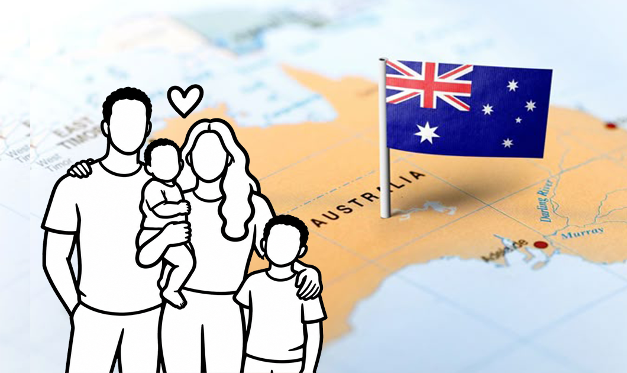
Australia is considering tighter immigration rules for international students that could make it more difficult for foreign students to bring spouses, children and other family members into the country.
The proposed changes are part of a broader plan by the Labor government to reduce net overseas migration and give authorities greater control over the number of people entering and leaving Australia.
The measures could have significant implications for international students who plan to relocate to Australia with their families.
Government Considers Restrictions on Student Dependants
Home Affairs Minister Tony Burke is expected to outline the proposed measures on Thursday, September 17, 2026, during an address at the National Press Club in Canberra titled, “The work of managing the migration program: Who arrives, who stays, who leaves.”
Among the measures under consideration is a major change to how Australia treats dependants of international students.
Australia issued more than 337,000 international student visas last year, with about 45,000 visas granted to dependants or family members of primary student visa holders.
Under the proposed approach, the majority of international students would be expected to travel to Australia without their family members. This could affect thousands of students who would otherwise seek to bring spouses or children with them during their studies.
Government Also Targets Visa Overstays
The proposed changes extend beyond international students and their families.
The Australian government is also considering measures aimed at reducing visa overstays and limiting the ability of people whose visas have expired to move into other visa categories.
If introduced, the measures could result in some migrants being required to leave Australia sooner rather than using another visa pathway to extend their stay.
Burke has said the government needs to reduce net overseas migration while ensuring that changes are targeted in a way that continues to support the Australian economy.
Australia Seeks to Reduce Net Overseas Migration
The proposed restrictions come as Australia works to bring net overseas migration down from approximately 305,000 to about 225,000 over two years.
The government has also maintained a target of around 185,000 permanent arrivals annually as it seeks to bring migration levels closer to its forecasts.
Net overseas migration measures the number of people who remain in Australia for at least 12 months within a 16-month period, after accounting for people leaving the country. The measure includes Australian citizens who leave the country and later return.
Net Migration Has Already Declined
Australia’s net overseas migration has declined for seven consecutive quarters since September 2023 and is forecast to fall below pre-pandemic levels by 2027–2028.
However, the number of temporary visa holders remains high. Australian Bureau of Statistics data showed 568,370 overseas arrivals during the 2024–25 financial year, highlighting the continued scale of international movement into the country.
The proposed reforms therefore come as the government attempts to manage both the overall level of migration and the number of temporary residents living in Australia.
Family Visa Options Could Become More Limited
Australia has previously allowed eligible international students to include family members, such as spouses and children, in their student visa arrangements.
Under the proposed changes, however, secondary visas for accompanying family members could be limited mainly to specific groups.
These could include:
- Higher-degree research students;
- Students from Pacific island countries;
- East Timorese students;
- Recipients of foreign government scholarships; and
- Individuals sponsored by Australian government departments.
The proposed approach would therefore create a more restricted pathway for many international students who intend to relocate with their families.
Australia Continues to Tighten Migration Requirements
The proposed student visa restrictions form part of a wider series of immigration measures introduced as Australia seeks to manage migration levels.
The country has also increased financial requirements for international students and adjusted other visa conditions as part of efforts to strengthen its migration system.
Australia previously raised the minimum salary threshold for employer-sponsored skilled visas to AUD 76,515 for applications lodged between July 1, 2025, and June 30, 2026.
The increase affected several major employer-sponsored pathways, including the Skills in Demand visa (subclass 482), Employer Nomination Scheme visa (subclass 186), Skilled Employer Sponsored Regional visa (subclass 494) and Regional Sponsored Migration Scheme visa (subclass 187).
These measures reflect the government’s broader focus on managing migration while continuing to attract workers with skills considered important to the Australian economy.
What This Means for International Students
For students considering Australia as a study destination, the proposed restrictions could make family relocation a more significant consideration.
Prospective students planning to move with spouses or children may need to determine whether they fall within any future exemption categories if the proposed changes are implemented.
Students should also consider:
- Whether their course qualifies for an exemption;
- Whether their nationality falls within an exempt category;
- The visa options available to accompanying family members;
- The financial implications of relocating as a family; and
- The possibility of changes to visa conditions during the application process.
Until the proposed measures are formally implemented, applicants should distinguish between existing visa rules and the changes currently under consideration.
A Wider Debate Over Australia’s Migration Levels
The proposed reforms come amid a wider political debate over immigration in Australia, with increasing pressure on the government to reduce migration levels.
The government is seeking to balance lower migration numbers with the continued need for skilled workers and international talent across the Australian economy.
For international students, the potential restriction on accompanying family members represents another significant consideration when evaluating Australia as a study destination.
Key Takeaway
Australia is considering tighter immigration rules that could significantly change how international students bring family members into the country.
Under the proposed approach, most international students could be required to travel to Australia without their spouses or children, while accompanying family visas could be limited to specific categories of students and applicants.
The proposals are part of Australia’s broader effort to reduce net overseas migration, address visa overstays and strengthen control over temporary migration.
For prospective international students, particularly those planning to relocate with their families, understanding the applicable visa rules and any exemptions will be important before making study and relocation plans.