
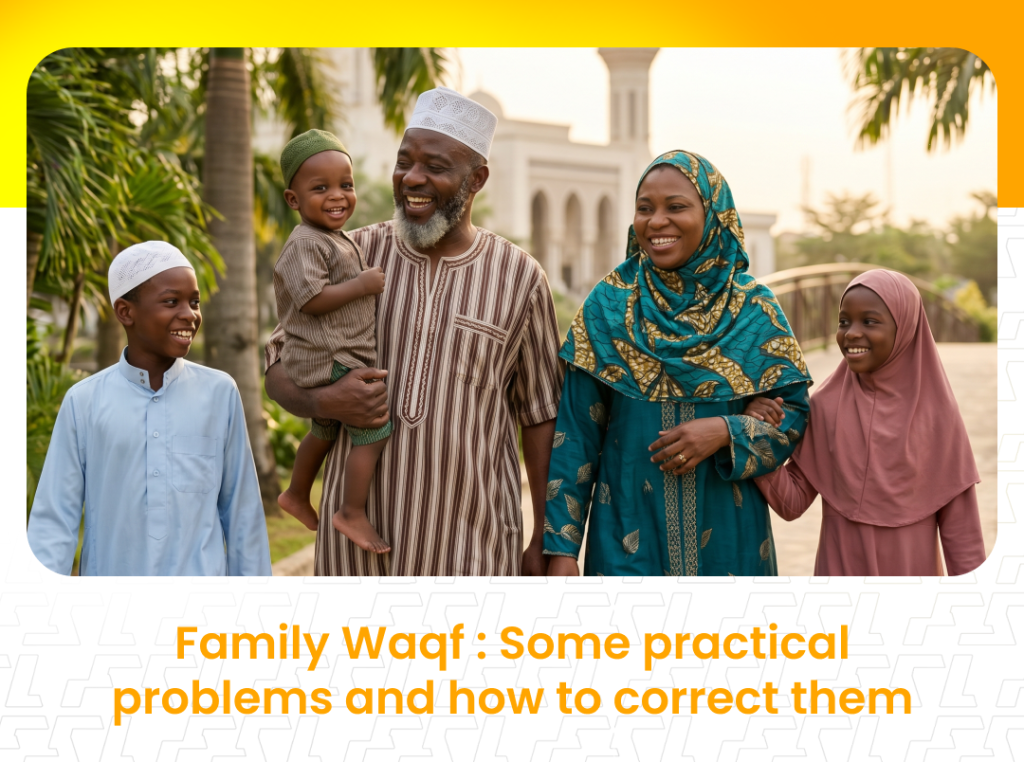
Welcome to the June 2026 edition of our Malaadhu Thar’wah newsletter.
In an old town in Nigeria, there lived a wealthy man named Alhaji Musa. Allah (SWT) had blessed him with great wealth: large farmlands, shops, and a huge family house inherited from his forefathers. Alhaji Musa was a very compassionate man, especially toward his daughters. During his lifetime, there existed an old cultural belief in some communities that:
“The family house or any inherited house does not belong to women.”
As a result, whenever a father died, the men inherited the entire family house(s), while women, even if they received something else, were often denied the right to own or live in the ancestral home or any house.
Alhaji Musa considered this to be wrong. He believed it contained injustice because Islam grants women inheritance rights just as it grants men. Therefore, he began thinking of a way to correct this problem.
As he grew older, he gathered his children together along with some Islamic scholars and said:
“I know that in the past, women were denied the right to the family house. I do not want this mistake to continue after my death. Therefore, I dedicate this house as a waqf for my daughters. Any daughter whose marriage ends or who faces hardship may return to this house and live there until Allah improves her condition.”
At first, people praised him and said:
“Masha Allah! What a compassionate father.”
However, after some years, certain problems began to appear — problems Alhaji Musa had not foreseen when establishing the waqf.

Some people began asking:
“Is it appropriate for a father to create a system that seems to anticipate the collapse of a daughter’s marriage before she can benefit from the waqf?”
Because the waqf was structured in such a way that:
- Only if her marriage failed,
- Only if she entered hardship,
- Only if life turned against her,
- Would she benefit from it?
This led some scholars to argue that even though the intention was noble, a waqf should not be designed in a manner that appears connected to marital breakdown or suffering in a woman’s life.

In the past, men were generally financially stronger. But today, you may find:
- A daughter who is a doctor,
- Another who is a university lecturer,
- Another who is married to a president, governor, or wealthy businessman,
- Or one earning a very high salary.
Meanwhile, a male relative may be:
- Unemployed,
- Struggling to pay house rent,
- Unable to pay school fees or Tahfiz expenses for his children, or
- Battling illness.
Then an important question arises:
“If the purpose of waqf is to support needy family members, why should it be restricted to women alone, when sometimes men may be in greater need?”

Another major issue that emerged was the maintenance of the property.
The house remained large and valuable, but those assigned to benefit from it often lacked the financial ability to maintain it:
- The roof began leaking,
- The walls started cracking,
- The electrical system failed,
- The water supply stopped functioning.
Because there was no sustainable maintenance plan, the family house gradually turned into a ruin. People began saying:
“How can a family own such a huge house yet be unable to maintain it?”
At this point, some waqf experts began drawing attention to an important reality:
“Not every family waqf structure is suitable for every era.”
They explained that there is a difference between ‘Compassion’ and ‘Sustainable planning.’
As a result, a more modern and balanced understanding began to emerge.
Instead of saying:
“The house belongs only to the daughters,”
Some proposed:
“This house is a waqf for any needy member among my children — male or female — whenever life becomes difficult for them.”
This approach was seen as closer to:
- Justice,
- Wisdom, and
- The true objectives of waqf.
Because the purpose of waqf is to relieve hardship, not merely to focus on gender alone.

Some experts further suggested that in today’s world, many family waqf structures should evolve into investment-based systems.
For example:
- The family house could be rented out,
- Income could be generated from it,
- And the proceeds used for:
- School fees,
- Tahfiz education,
- Medical treatment,
- Marriage support,
- Feeding needy relatives,
- Caring for orphans,
- Eid and sacrifice expenses,
- Or improving the lives of struggling family members.
Because if a large property is left without proper management, it can become a liability rather than a blessing.
Some houses are worth millions, yet the families themselves remain in poverty.
Therefore, experts emphasized:
“It is not wise to preserve wealth in a way that allows it to decay while people remain in hardship.”
Lessons Society Should Learn
- Islam grants women inheritance rights; therefore, culture should not deprive them of those rights.
- Compassion alone is not enough; wisdom and long-term vision are necessary when establishing a waqf.
- Family waqf should remain flexible enough to adapt to changing times.
- The most beneficial waqf is the one that is: sustainable, productive, and capable of addressing the needs of the entire family.
- Wealth that produces no benefit and cannot be maintained may become a liability rather than a blessing.
In the end, people came to understand that:
“Waqf is not merely about leaving behind a house — rather, it is a profound wisdom of ensuring that wealth continues to benefit people after one’s death, through justice, compassion, and sound planning.”
May Allah (SWT) grant us the ability to correct these mistakes and enable our families to continue reviving the Sunnah of family waqf in a modern and sustainable way. Ameen.
Abbas Adam Abba
Chairman, Alburhan Waqf Initiative, Kano – Nigeria
Tel: 08038569777
Email: abbasadamrz@gmail.com

Fiduciary Services Limited is committed to assisting Muslim clients in aligning their estate and business affairs with Islamic principles. Contact us today to ensure your legacy reflects your faith and values.
Get in touch with one of our professionals today by sending an email to contact@fiduciaryservicesltd.com. To book a FREE CONSULTATION click link: bit.ly/4sjQDLV
Shukran Jazeelan for reading.
Mercy Edukugho-Aminah
mercyaminah@fiduciaryservicesltd.com
+234 803 726 5961