

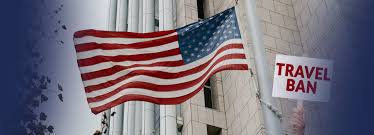
The United States of America (US) has red-flagged several countries by fully banning their citizens from travelling or even obtaining an immigration visa into the US and partially restricted travel from several more countries.
On the 16th of December 2025, President Donald Trump issued a new Proclamation which expands the scope of Proclamation 10949 of June 4, 2025, significantly increasing the list of nations facing entry and immigration barriers into the United States. Access the White House Correspondence here as well as the Proclamation by clicking here.
Prior to President Trump’s new administration which commenced in January 2025, the previous administration led by him introduced the first order on travel bans in 2017. This sparked widespread criticism and concern. Many people and countries believed Trump was using national security and the public safety of the American people as an ostensible excuse to witch-hunt foreign nationals from certain countries. The criticisms that arose were also hinged on the possible constitutional violations that such an order would have occasioned. However, the Supreme Court in the U.S. later upheld the policy stating that it was constitutional and lawful.
WHICH COUNTRIES ARE AFFECTED?
The countries on a full ban from entering the U.S. include: Afghanistan, Burkina Faso, Burma, Chad, Equatorial Guinea, Eritrea, Haiti, Iran, Laos, Libya, Mali, Niger, Republic of Congo, Sierra Leone, Somalia, South Sudan, Sudan, Syria, Yemen, and the Palestinian Authority.
The countries on a partial travel restriction into the U.S. include: Angola, Antigua and Barbuda, Benin, Cuba, Dominica, Gabon, Gambia, Ivory Coast, Malawi, Mauritania, Nigeria, Senegal, Tanzania, Togo, Tonga, Venezuela, Zambia, and Zimbabwe. (Note: For Turkmenistan, restrictions remain for immigrants but have been lifted for non-immigrant visas).
IMPACTS AND IMPLICATIONS
- The countries listed on the full ban travel list are those whose foreign nationals cannot travel to the United States at all.
- The countries on the partial restriction list are generally those whose citizens may travel to the United States as non-immigrants but cannot migrate to the United States fully.
However, the severity of “partial” restrictions varies significantly by country, with some nations like Nigeria facing broad suspensions of temporary visas as well.
REASON FOR PRESIDENT TRUMP’S DECISION
According to the White House Press release on December 16, 2025, the reasons for several countries being barred or partially barred is based on the drastic need to restrict citizens from countries with high terrorism risks, corruption, fraudulent civil documentation, poor criminal record keeping, and unverifiable Citizenship by Investment (CBI) programs (without residency requirements) access into the US.
The Trump administration has cited defective and inadequate vetting of proposed immigrants due to the vices present in these countries. They believe that these deficiencies open the American people and the US to threats of terrorism and criminality, which would have adverse effects on public safety.
EXCEPTIONS TO THE BAN AND PARTIAL TRAVEL RESTRICTION
These bans and restrictions have certain exemptions. They do not affect any lawful permanent resident of the United States, or a dual national of any of the fully banned or partially restricted countries travelling on a passport issued by a non-designated country. Exceptions also apply to any athlete or member of an athletic team for competitions like the World Cup, Olympics, or other major sporting events as determined by the Secretary of State, or individuals whose travel would be of national interest at the Secretary’s discretion. However, the list is subject to a review after 6 months and countries that were on the list could be removed or some restriction might be lifted.
HOW DOES THIS POLICY AFFECT NIGERIA AND ITS CITIZENS?
Nigeria has been hit with severe specific restrictions that go beyond a simple ban on permanent migration. While technically classified as “partial,” for the vast majority of Nigerian citizens, this represents a significant blockade on travel effective January 1, 2026.
Nigeria – “Country of Particular Concern” Designation:
It is noteworthy that this restriction did not happen in a vacuum. On October 31, 2025, President Trump officially redesignated Nigeria as a “Country of Particular Concern” (CPC) regarding religious freedom; the Christian Genocide. This designation served as a diplomatic warning shot, citing “systematic and egregious violations” by radical groups. This status laid the legal and political groundwork for the severe restrictions (partial restrictions) that followed thereafter in December 2025.
Building on Nigeria’s designation as Country of Particular Concern, the U.S. government cites two primary reasons for Nigeria’s targeted visa restrictions:
- Terrorism Concerns: The proclamation notes that radical Islamic terrorist groups such as Boko Haram and the Islamic State operate freely in certain parts of Nigeria, creating substantial screening and vetting difficulties.
- High Overstay Rates: The administration cited the “Overstay Report,” noting that Nigeria had a B-1/B-2 (business/tourism) visa overstay rate of 5.56 percent and a student/exchange visa (F, M, and J) overstay rate of 90 percent.
The Result:
The entry of Nigerian nationals in the US is suspended for the following categories:
- Immigrants: Those seeking to move to the U.S. permanently (Green Cards).
- Non-Immigrants (Suspended): The suspension specifically includes B-1 (business), B-2 (tourism/medical), and F, M, and J (student and exchange visitor) visas.
Impact on Specific Groups:
- Students: Prospective students with admission letters cannot obtain visas. Current students already in the U.S. are urged not to travel home for holidays; leaving the U.S. may result in being denied re-entry under the new proclamation. There may be a waiver based on a case-to-case basis if such admission would be of national interest to the United States.
- Business & Medical: High-net-worth individuals are now cut off from attending board meetings, conferences, or accessing U.S. medical facilities for treatment.
- The Only Options Left: The few visa types not explicitly suspended are niche categories like H-1B (specialized workers) and EB-1 (extraordinary ability), though these will now face “extreme vetting” and reduced validity periods.
HOW DOES THIS POLICY AFFECT HIGH NET WORTH INDIVIDUALS?
This policy has profound implications for High-Net-Worth Individuals (HNWIs), particularly those utilizing Citizenship by Investment (CBI) programs to secure second passports.
- DEVALUATION OF “GOLDEN PASSPORTS”:
Many HNWIs from countries with weak passports (such as Nigeria) have historically purchased citizenship from Caribbean nations like Dominica or Antigua and Barbuda to gain easier access to the United States. With these specific Caribbean nations now placed on the “partial restriction” list, the utility of these passports for U.S. immigration is severely diminished. A second passport from these jurisdictions no longer guarantees a bypass of the vetting protocols associated with the investor’s country of origin.
- INTENSIFIED VETTING ON WEALTH SOURCE:
The administration’s specific mention of “unverifiable Citizenship by Investment” signals a crackdown on the opacity of funds. HNWIs attempting to enter the U.S. will face aggressive scrutiny regarding the source of their wealth and the legitimacy of their alternative citizenships. The presumption of innocence often afforded to wealthy investors is effectively replaced by a “guilty until proven vetted” standard.
- ESTATE PLANNING AND ASSET MOBILITY:
For HNWIs with assets or family in the U.S., these restrictions create a logistical crisis. Those from fully banned countries can no longer enter to manage their U.S. estates or attend board meetings, regardless of their net worth. This may force a liquidation of U.S. assets or a complete restructuring of family wealth management into neutral jurisdictions like Singapore or the UAE to avoid being cut off from their capital.
FSL AND YOUR GLOBAL MOBILITY
The December 2025 U.S. Proclamation has fundamentally changed the value of a second passport. With the U.S. administration explicitly targeting “unverifiable” Citizenship by Investment schemes and placing partial restrictions on nations like Dominica and Antigua, holding the wrong second citizenship can now be a liability rather than an asset.
At Fiduciary Services Limited, we provide solutions for high-net-worth families who are desirous of North American access and mobility (amongst other considerations they may have).
Our Citizenship and Residency Planning (CRP) solutions provide:
- Pivot to “Safe Harbor” Jurisdictions: Secure residency or citizenship in Countries that maintain strong diplomatic ties with the U.S. and are exempt from the recent ban, ensuring your second passport remains a valid travel document.
- Navigate Enhanced Scrutiny: We ensure your application meet the highest standards of transparency, countering the “defective vetting” concerns cited by the White House and protecting you from being flagged during visa processing.
- Safeguard Business Mobility: Ensure uninterrupted access to the U.S. market by aligning with jurisdictions like Portugal, Greece, and Malta, which offer stability that volatile Caribbean options may no longer guarantee.
- Future-Proof Your Estate: Structure your wealth and residency to withstand shifting legislative risks, ensuring your assets remain mobile even when borders close.
Are you interested in reputable citizenship by investment or residency that serves as a strategic asset for you, your family and business? Chat with us or send an email to Contact@fiduciaryservicesltd.com