

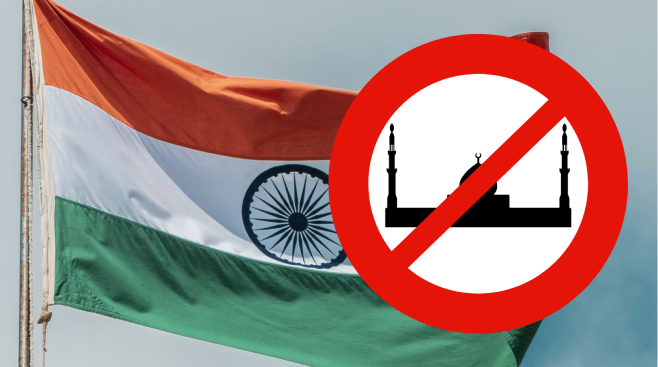
NEW DELHI, India — India has commenced the implementation of the Citizenship Amendment Act (CAA), a controversial law that provides an expedited pathway to Indian citizenship for certain non-Muslim migrants from Afghanistan, Bangladesh and Pakistan.
The implementation has renewed concerns among opposition parties, civil society organisations and human rights groups over the use of religion as a criterion in India’s citizenship framework.
What the Law Provides
The CAA provides a simplified route to citizenship for Hindus, Sikhs, Buddhists, Jains, Parsis and Christians from Afghanistan, Bangladesh and Pakistan who entered India on or before 31 December 2014 and are seeking protection from alleged religious persecution.
The Indian government has described the legislation as a humanitarian measure intended to provide refuge to persecuted religious minorities from the three neighbouring countries.
Eligible applicants are able to apply for citizenship through an online application process.
The government has also maintained that the CAA does not affect the citizenship status of Indian citizens, including Muslims, and does not provide a mechanism for revoking the citizenship of Indian-born Muslims.
Why the Law Is Controversial
The CAA has attracted significant criticism because it establishes religion as a distinguishing criterion for eligibility for this particular citizenship pathway.
Critics argue that the exclusion of Muslims is discriminatory and could contribute to the marginalisation of India’s Muslim population, estimated at more than 200 million people.
The legislation was passed by Parliament in 2019, but its implementation was subsequently delayed following widespread protests across the country. The demonstrations resulted in significant violence and loss of life.
Additional concerns have centred on the possible interaction between the CAA and proposals for a National Register of Citizens (NRC). Critics have expressed concern that, if implemented together, the two measures could have disproportionate consequences for undocumented Muslims who may be unable to establish their citizenship.
The Indian government has rejected these concerns and maintained that the CAA is specifically intended to assist persecuted minorities from the three neighbouring countries.
Government’s Position
The Bharatiya Janata Party (BJP) government has defended the legislation as a humanitarian intervention for religious minorities from Afghanistan, Bangladesh and Pakistan who, according to the government, have limited alternative avenues of refuge.
Government representatives have repeatedly stated that the legislation is not directed at Indian Muslims and does not alter their existing citizenship rights.
Political Context
The implementation of the CAA has also become a significant political issue.
Opposition leaders have criticised the government’s decision to proceed with the legislation at a politically sensitive period, arguing that the measure could deepen religious and political divisions.
The issue is particularly significant in states such as West Bengal and Assam, where questions surrounding migration, citizenship and religious identity have long been politically contentious.
Broader Implications
India remains constitutionally committed to secularism and is home to one of the world’s most religiously diverse populations.
The implementation of the CAA therefore raises broader questions concerning the relationship between citizenship, migration, religious identity and equality before the law.
At its core, the controversy centres on the distinction between two positions: the government’s assertion that the CAA is a targeted humanitarian measure for persecuted minorities, and critics’ contention that the exclusion of Muslims from the scheme represents discriminatory treatment on religious grounds.
The Citizenship Amendment Act does not, by itself, revoke the citizenship of Muslims who are already Indian citizens. Its principal effect is to establish an expedited citizenship pathway for specified non-Muslim religious communities from Afghanistan, Bangladesh and Pakistan who meet the statutory eligibility requirements.
The controversy surrounding the law nevertheless reflects a wider debate in India over whether religion should play a role in determining access to citizenship and how such policies should be reconciled with the country’s constitutional commitment to equality and secularism.