

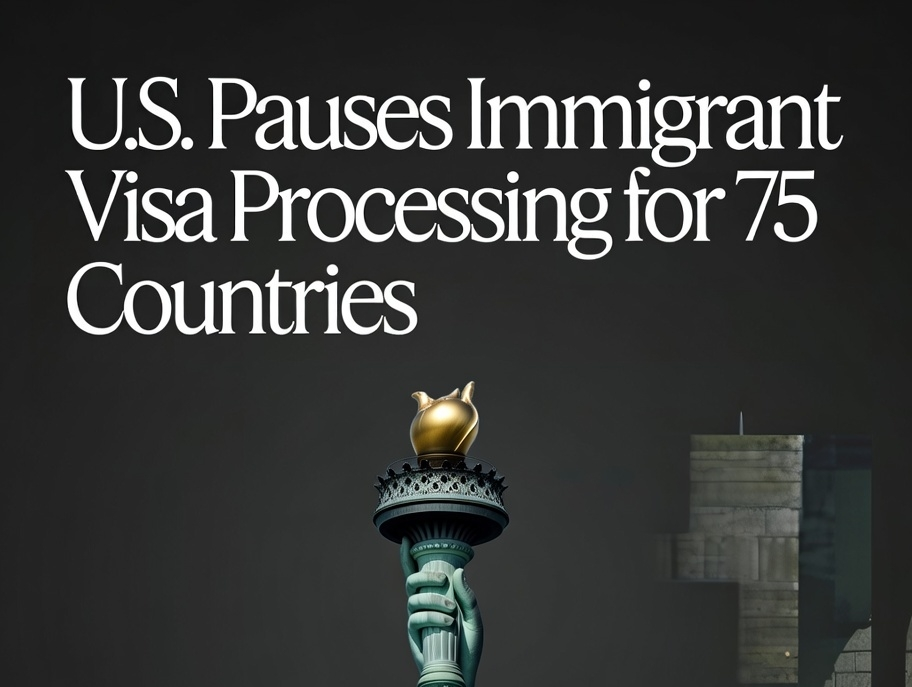
The U.S. State Department has announced a sweeping new policy: immigrant visa processing will be suspended for citizens of 75 countries beginning January 21, 2026. The move is framed as an effort to restrict access for individuals deemed likely to rely on public assistance and it will halt decisions on new immigrant visas until further reassessment of screening procedures. It should be noted that the change only affects people who want to move to the US permanently and does not apply to visitors or short-term visa holders.
While the decision is rooted in U.S. domestic politics and ongoing debates over immigration policy, its practical consequences go far beyond Washington’s borders. For globally mobile families, high-net-worth individuals, and entrepreneurs planning cross-border careers, the move highlights an emerging trend in international movement: traditional pathways to residence and long-term settlement are becoming more uncertain and unpredictable.
At first glance, a pause on immigrant visas might seem like old news, adjustments to U.S. visa policy happen frequently. But this policy is different in two key ways:
- Scale: The list of 75 affected countries spans multiple continents and includes nations in Africa, Latin America, the Middle East, Asia, and Eastern Europe. Even long standing partners are included, reflecting a departure from narrow security-focused exclusions toward broader socio-economic screening criteria. The full list of countries affected can be found below:
List of Countries on Trump’s Travel Ban List.
|
Africa |
Asia |
Europe |
Eurasia |
North America |
Oceania |
South America |
|
Algeria |
Afghanistan |
Albania |
Azerbaijan |
Antigua and Barbuda |
Fiji |
Brazil |
|
Cameroon |
Armenia |
Belarus |
Georgia |
Bahamas |
|
Colombia |
|
Cape Verde |
Bangladesh |
Bosnia and Herzegovina |
Kazakhstan |
Barbados |
|
|
|
Ivory Coast |
Bhutan |
Kosovo |
Russia |
Belize |
|
|
|
Democratic Republic of Congo |
Cambodia |
Macedonia |
|
Cuba |
|
|
|
Egypt |
Iran |
Moldova |
|
Dominica |
|
|
|
Eritrea |
Iraq |
Montenegro |
|
Grenada |
|
|
|
Ethiopia |
Jordan |
Uruguay |
|
Guatemala |
|
|
|
Gambia |
Kuwait |
|
|
Haiti |
|
|
|
Ghana |
Kyrgyzstan |
|
|
Jamaica |
|
|
|
Guinea |
Laos |
|
|
Nicaragua |
|
|
|
Liberia |
Lebanon |
|
|
Saint Kitts and Nevis |
|
|
|
Libya |
Mongolia |
|
|
Saint Lucia |
|
|
|
Morocco |
Myanmar |
|
|
Saint Vincent and the Grenadines |
|
|
|
Nigeria |
Nepal |
|
|
|
|
|
|
Republic of Congo |
Pakistan |
|
|
|
|
|
|
Rwanda |
Syria |
|
|
|
|
|
|
Senegal |
Thailand |
|
|
|
|
|
|
Sierra Leone |
Uzbekistan |
|
|
|
|
|
|
Somalia |
Yemen |
|
|
|
|
|
|
South Sudan |
|
|
|
|
|
|
|
Sudan |
|
|
|
|
|
|
|
Tanzania |
|
|
|
|
|
|
|
Togo |
|
|
|
|
|
|
|
Tunisia |
|
|
|
|
|
|
|
Uganda |
|
|
|
|
|
|
- Underlying Rationale: The policy builds on expanded use of the “public charge” standard, a U.S. immigration concept historically used to assess whether an applicant might become dependent on government assistance. The current interpretation broadens the factors that can negatively affect eligibility, including age, financial capacity, health conditions, and employability.
The result is a more discretionary, case-by-case immigration landscape, where eligibility stands not only on documentation but on subjective assessments of future economic self-sufficiency.
This shift is not unique to the U.S. Several developed countries are tightening long-term immigration pathways or tying residence eligibility to economic criteria, further complicating global mobility strategies.
Citizenship by Investment: A Strategic Response, Not a Stopgap
In a regulatory environment where immigration policy can change with short notice, traditional paths to permanent residence or long-term settlement may no longer provide reliable planning platforms for internationally mobile individuals. This is where Citizenship by Investment (CBI), a legitimate and established global option becomes a strategic tool rather than a fringe benefit.
For families and investors seeking predictability, travel freedom, and broader global footprint, second citizenship can deliver visa-free or visa-on-arrival access to dozens of countries, reducing dependency on unpredictable immigration processes for temporary or long-term movement. Also, for entrepreneurs and professionals with business interests across borders, holding a second citizenship can ease access to markets, streamline business travel, and support educational opportunities for dependents.
In the context of the U.S. policy change, Citizenship by Investment is not a reactive workaround; it is a proactive mobility strategy that places individuals and families in control of their international movement, independent of shifting political winds in any one country.
At Fiduciary Services Limited, the focus is on holistic, compliant planning that integrates global citizenry with financial, estate, and legacy objectives. In a world where immigration policy is increasingly volatile, FSL’s Citizenship by Investment services are designed to help clients:
- Select jurisdictions that align with travel and investment goals
- Understand the legal and tax implications of dual citizenship
- Integrate citizenship planning with wealth preservation and succession
- Manage family mobility plans with foresight and certainty
Citizenship by Investment is not a one-size-fits-all solution, but as U.S. visa corridors tighten and global mobility becomes more regulated, it stands out as a strategic asset, not a luxury.
For individuals and families with international aspirations, the key question is no longer whether to plan for global mobility, but how to do it in a way that is resilient to changing immigration frameworks.