


Conversations on Wealth Management: Trends and Dynamics Shaping the Lives and Legacies of Affluent and High-Net-Worth Individuals
Theme: The Era of Transparency: Navigating Nigeria’s New Tax and Regulatory Landscape
Overview
The seventh edition of the Wealth Webinar series was convened at a critical point in Nigeria’s fiscal and regulatory evolution. Against the backdrop of sweeping tax reforms, increased regulatory coordination, and a global shift towards transparency and data-driven oversight, the session focused on unpacking what Nigeria’s new tax regime means in practical terms for individuals, families, businesses, fiduciaries, and globally mobile Nigerians.
This edition moved beyond a technical review of legislation to examine how recent reforms affect decision-making, risk management, asset structuring, succession planning, and long-term wealth preservation. Particular attention was paid to worldwide income rules, capital gains taxation, digital and cross-border income, and the growing convergence between tax compliance, governance, and estate planning.
This report presents a synthesis of insights and discussions from the session, drawing from the contributions of the moderator and panel experts.

Setting the Tone
The conversation was framed around the reality that transparency, accountability, and compliance are no longer abstract ideals but enforceable legal and commercial obligations. Over the past year, Nigeria’s tax landscape has undergone significant reform, redefining how income is identified, how value is assessed, and how both individuals and businesses are expected to interact with the tax system.
Transparency has become the central theme of the new regime. From expanded tax nets and clearer rules to stronger enforcement mechanisms and increased information sharing between agencies and across borders, taxpayers are now operating in an environment where opacity carries heightened risk.
Rather than approaching the reforms as punitive, the session emphasized the opportunities embedded in the changes: better planning, improved certainty, alignment with global best practices, and the ability to structure wealth and businesses more deliberately. The discussion therefore sought to demystify the law, separate misconception from reality, and provide practical guidance for navigating Nigeria’s evolving fiscal framework with clarity and confidence.
Speakers
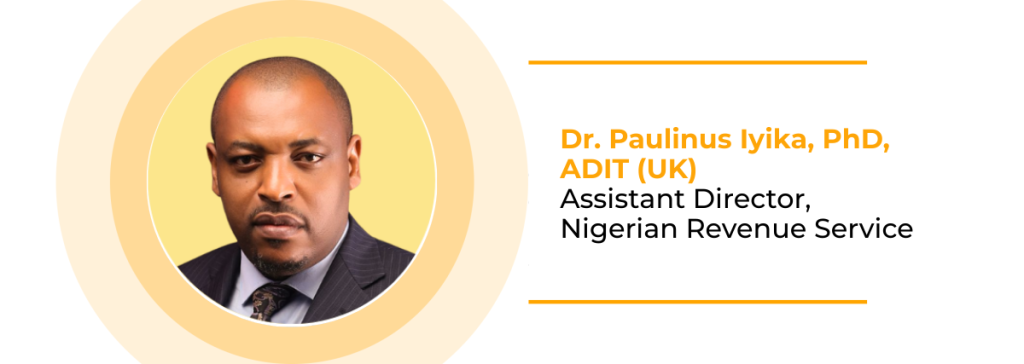
- Paulinus Iyika, PhD, ADIT (UK)
Assistant Director, Nigerian Revenue Service
- Aina Joseph Tunji (FCA)
Managing Partner, Tunji Aina & Co. (Chartered Accountants)
Key Discussion Themes and Insights
- The Objective and Philosophy Behind Nigeria’s Tax Reforms
Dr Iyika emphasised that Nigeria’s tax reforms are not primarily about increasing the tax burden, but about improving efficiency, fairness, and certainty within the system. The reforms seek to correct years of fragmentation that created overlapping obligations and high compliance costs.
Key objectives include:
- simplification of the tax framework;
- harmonisation of multiple taxes and levies; and
- improved ease of compliance for taxpayers.
A central feature of this approach is the Development Levy, introduced to consolidate statutory contributions. The levy replaces the Tertiary Education Tax, NITDA Levy, NASENI Levy, and Police Trust Fund Levy, reducing duplication and administrative burden. Importantly, entities with annual turnover of ₦100 million or below are exempt, reinforcing the principle of taxing fairly rather than taxing more.
- Capital Gains Tax: What Has Changed and Why It Matters
Mr. Aina highlighted capital gains tax as one of the most debated aspects of the new regime. Under the reforms, capital gains tax has been harmonised with corporate income tax rates, resulting in a higher effective rate for chargeable gains.
A critical distinction, however, lies between personal and business assets. Gains arising from the disposal of an individual’s personal residential property are exempt, while gains from assets held for business or investment purposes remain taxable. This distinction underscores the importance of proper documentation, asset classification, and intentional structuring.
He further provided a practical illustration showing how acquisition cost, improvement expenses, and professional fees are deducted before computing taxable gains.
In response to a follow-up question on whether individuals could simply reclassify assets as personal residences to avoid tax, Mr. Tunji emphasized the importance of documentation and substance. He cautioned that indiscriminate reclassification could undermine succession planning and asset protection objectives.
For founders, investors, and high-net-worth individuals, the discussion reinforced the need to understand how assets are held; personally, corporately, or through special purpose vehicles, and the tax consequences that flow from each structure.

- Incentives Through Simplification and Compliance Efficiency
On incentives, Mr Aina explained that the reforms are not focused on introducing numerous new incentive schemes, but rather on making the tax system itself more supportive of economic activity through simplification, harmonisation, and clarity.
Under the new regime, incentives are increasingly embedded within the structure of the tax system and are delivered through higher thresholds, targeted exemptions, and specific reliefs, rather than through fragmented tax holidays or sector-specific concessions.
The key incentives highlighted include:
- Removal of small companies from the tax net by increasing the turnover threshold to ₦100,000,000, allowing early-stage and growing businesses to stabilise before becoming fully taxable;
- Reliefs for minimum-wage earners, aimed at protecting low-income individuals and supporting disposable income;
- Exemptions for disposal of certain personal assets, reducing the tax burden on basic personal wealth and non-productive assets; and
- Reduced compliance costs, achieved through fewer overlapping taxes and clearer obligations, which function as an indirect but significant incentive for businesses and individuals.
These measures were positioned as deliberate efforts to reduce the cost of compliance and allow businesses and individuals to grow before becoming fully taxable.
He further emphasized that incentives are now subject to greater transparency and disclosure requirements, reflecting a policy shift away from open-ended or loosely monitored reliefs. The objective, he explained, is to ensure that incentives support genuine economic activity and productivity, rather than aggressive tax planning or arbitrage.
Overall, his position was that the reform incentivises growth by simplifying obligations, lowering entry barriers, and improving certainty, rather than by expanding the number of tax incentives available.
- Worldwide Income and Residency: Managing Global Exposure
The session addressed increasing concerns regarding the taxation of worldwide income and provided clarification on how the concept is applied in practice. The panel highlighted the following key points:
- Worldwide income is primarily linked to tax residency, not citizenship, and Nigeria’s approach remains broadly aligned with established international standards.
- Physical presence tests, including the 183-day rule, a permanent establishment or significant economic presence, continue to be relevant; however, residency determination now extends beyond simple day-count thresholds.
- Renunciation of citizenship does not automatically eliminate tax exposure. Modern tax systems assess the economic reality of an individual’s circumstances rather than nationality alone.
- Substance-based factors such as habitual abode, economic ties, and the location of personal and business interests are increasingly decisive in determining residency.
This approach reflects a global shift towards substance-over-form, moving away from reliance on formal declarations or technical status changes.
Traditional low-tax jurisdictions like Dubai are also adopting minimum tax standards, significantly reducing the effectiveness of jurisdiction shopping as a tax planning strategy.
The panel further noted that tax planning arrangements are now subject to enhanced disclosure requirements. Planning strategies must be transparent and defensible, with sufficient substance to reflect genuine economic activity. This represents a clear move away from opaque or aggressive planning structures.
For globally mobile Nigerians, the key practical takeaway is the need for deliberate and proactive tax planning, including:
- careful monitoring of residency status;
- clear understanding of income source rules; and
- alignment between lifestyle choices, business operations, and tax obligations.
- full and timely disclosure of tax planning arrangements to mitigate compliance and enforcement risks.
- Transparency, Information Exchange, and the End of Secrecy
A recurring theme throughout the session was the erosion of traditional hiding places. Advances in technology, coupled with Nigeria’s participation in international information exchange frameworks, mean that undeclared income and opaque structures are increasingly visible.
It was also clarified that while public anxiety has grown, driven in part by misinformation around direct debits from bank accounts, the tax system does not operate arbitrarily. Tax authorities are required to follow due process, including notification, assessment, and engagement with the taxpayer, before any enforcement action can be taken. Direct debits from accounts occur only in extreme cases, typically following established liability, non-compliance, and judicial authorization.
Within this framework, the panel explained substitution under section 60 of the Nigeria Tax Acts, which relates to recovery rather than avoidance. Where tax is due and unpaid, the tax authority may appoint a third party holding or expected to hold the taxpayer’s funds as an agent, requiring that party to apply those funds to settle the liability. Such notices are subject to objection and appeal, reinforcing procedural fairness.
Dr. Iyika explained that tax administration is evolving from self-assessment models to more interactive, technology driven systems. Real-time data, third-party confirmations, beneficial ownership registers, and cross-border information sharing now play a central role in enforcement. He further discussed Controlled Foreign Company (CFC) rules, explaining how profits retained offshore by Nigerian-controlled entities may now be taxed in Nigeria to prevent double non-taxation. He emphasized that passive income such as dividends, royalties, and interest are particularly targeted.
This shift was positioned not as a threat, but as a call for better governance, improved record-keeping, and proactive compliance supported by professional advice.
- Digital Economy, Remote Work, and Emerging Tax Boundaries
The session addressed the growing tax implications of digital businesses, content creators, and remote workers, highlighting the challenges posed by cross-border income generation and evolving work models.
Income earned by remote workers, digital freelancers, and content creators is clearly taxable under the NTA 2025, not as a new tax but as an express clarification that digital and platform-based income has always fallen within the tax net. Earnings from online activities; including content creation, social media monetisation, digital products, subscriptions, advertising revenue, and remote consulting must be reported annually and taxed at the applicable rates where thresholds are exceeded, with genuine business losses deductible where allowed by law. Payments received in cryptocurrency are taxed in the same manner as cash, while profits from the disposal of NFTs or digital tokens are taxable under the applicable income or capital gains rules.
Mr. Aina acknowledged that a number of grey areas persist, particularly in situations where income is taxed at source outside Nigeria. He cautioned against the risk of double taxation and noted that Nigeria’s network of double tax treaties may offer relief in appropriate cases, depending on the facts and applicable treaty provisions.
Dr. Iyika explained that the taxation of the digital economy has already undergone significant development through successive Finance Acts. He noted that the law now recognises significant economic presence as a basis for taxation, even in the absence of physical presence. He further emphasized that the legal form through which activities are conducted, whether by individuals, enterprises, or corporate entities remains the primary determinant of tax exposure.
He also drew attention to provisions that impose penalties on companies that transact with unregistered vendors, underscoring that tax compliance has become a prerequisite for commercial participation and ongoing eligibility.
- Trusts, Estates, and Look-Through Rules
The session examined the treatment of trusts and estate planning structures, particularly in the context of offshore arrangements and regulatory scrutiny.
In response to questions raised by the moderator, Dr. Iyika clarified that the use of trusts is not prohibited under Nigerian law. However, he explained that such structures are subject to look-through rules where the settlor retains control or continues to enjoy the benefits of the assets. In such cases, the income or assets may be attributed to the settlor for tax purposes.
He further emphasized the importance of disclosure and substance-based assessment, noting that the expansion of beneficial ownership registers and cross-border information sharing frameworks has significantly reduced the scope for opacity in trust and estate planning arrangements.
- Philanthropy, Donations, and Tax Integrity
The final discussion focused on philanthropic activities, including charitable foundations, donations, and corporate social responsibility initiatives, and the extent to which such activities attract tax benefits under the current tax framework.
In addressing the question, Dr. Iyika explained that while philanthropic giving remains permissible, the law places clear emphasis on the public character of the recipient entity. He noted that allowable tax deductions for donations are now more tightly regulated, in response to past practices where foundations were sometimes used as tax planning vehicles to significantly reduce tax liabilities.
He clarified that for donations to qualify for tax relief, the beneficiary must be genuinely public in nature and not traceable to a private business, commercial venture, or closely connected interest of the donor. Donations to clearly public institutions, such as government-owned schools and similar public-interest bodies, were cited as examples that would generally meet this threshold.
Dr. Iyika emphasized that these measures are intended to close loopholes and prevent the use of charitable structures as a means of profit shifting or tax avoidance. He further noted that while the law does not discourage genuine philanthropy or corporate social responsibility, it draws a clear distinction between bona fide charitable giving and arrangements designed primarily to undermine tax obligations.
He also highlighted the introduction of enhanced disclosure requirements under Nigerian tax legislation, which now place the onus on taxpayers to disclose their tax planning arrangements. Under this regime, taxpayers are required to explain how their transactions are structured and the rationale behind them, reflecting a broader shift toward transparency and reduced tolerance for opaque tax planning practices.
- VAT and Withholding Tax: Key Compliance Considerations
Mr. Aina confirmed that the VAT rate remains at 7.5%, with no change under the current framework. However, he noted that the government has expanded the list of VAT-exempt and zero-rated goods and services. He clarified that while VAT is not charged on either category, zero-rated supplies allow for the recovery of input VAT, whereas exempt supplies do not.
He further explained that companies are now broadly classified as small or large based on turnover. Entities with annual turnover below ₦100 million qualify as small companies and are generally not required to charge or collect VAT. Nonetheless, VAT may still apply where such entities transact with larger, VAT compliant organisations.
On withholding tax, Mr. Aina described it as an advance tax mechanism designed to ensure compliance. He explained that applicable withholding tax is deducted at source at prescribed rates, depending on the nature of the transaction, and remitted on behalf of the recipient. These deductions are credited against the taxpayer’s final tax liability and may either offset or reduce the amount payable at year-end.
He also noted that individuals’ withholding tax is remitted to the relevant State Internal Revenue Service and offset upon assessment. The discussion emphasized the importance of understanding applicable thresholds, rates, and sector-specific obligations to ensure accurate compliance under the evolving tax framework.
- Audience Questions, Clarifications, and Closing Remarks
The session concluded with a question and answer segment, during which participants sought clarification on the practical application of the new tax framework, particularly in relation to timing, loss relief, and the scope of worldwide income.
Addressing the question on when the new tax law takes effect, Dr. Iyika explained that its application depends on the relevant basis of assessment. For individuals in paid employment, the changes take effect immediately, with the new rules reflected in earnings from the commencement of the year. For self-employed individuals and those operating businesses, income is assessed based on the applicable assessment basis, meaning that declarations are made at year-end in respect of income earned after the law has come into force. He noted that further administrative guidance is expected to clarify transitional issues.
On the treatment of losses incurred on overseas income, Dr. Iyika emphasized that tax liability is fundamentally linked to residency. Where an individual is resident in Nigeria and operates multiple income streams, losses incurred in one line of business may generally be relieved against profits from other sources, subject to statutory conditions and proper documentation. He explained that Nigerian tax law permits loss relief and, in some cases, the carry-forward of losses for a limited number of years, reinforcing the importance of accurate records and consolidated reporting.
The discussion on worldwide income focused on corporate structures involving offshore holding companies and Nigerian operating entities. Dr. Iyika explained that recent reforms have expanded the definition of a Nigerian company beyond place of incorporation to include companies that are effectively managed and controlled from Nigeria. Under this approach, offshore holding structures with decision-making and substantive activities centered in Nigeria may now fall within the Nigerian tax net, aligning local rules with international best practice and limiting the effectiveness of purely nominal offshore arrangements.
- Practical Guidance for Individuals and Businesses
In closing, the panel offered practical advice for navigating the new era of transparency:
- Embrace documentation and disclosure: Accurate records and clear audit trails are essential.
- Engage professional advisers: Tax, legal, and fiduciary experts play a critical role in lawful structuring and compliance.
- Plan proactively: Tax considerations should be integrated into business strategy, investment planning, and estate planning, not treated as an afterthought.
- Stay informed: Ongoing reforms mean that taxpayers must continuously update their understanding of obligations and opportunities.
Conclusion
Wealth Webinar 7.0 reinforced the message that Nigeria has entered a new fiscal era; one defined by transparency, coordination, and global alignment. While the reforms introduce new responsibilities, they also create opportunities for better planning, stronger governance, and more sustainable wealth preservation.
For individuals, families, and businesses willing to engage the system deliberately and informedly, the new landscape offers not just compliance, but clarity and confidence in navigating the future of wealth and legacy in Nigeria.
As part of our Wealth Preservation services, we have experienced Advisors ready to assist you in developing an estate plan that protects, preserves, and sustains you and your family’s wealth for generations.
Get in touch with one of our professionals today by sending an email to contact@fiduciaryservicesltd.com.