

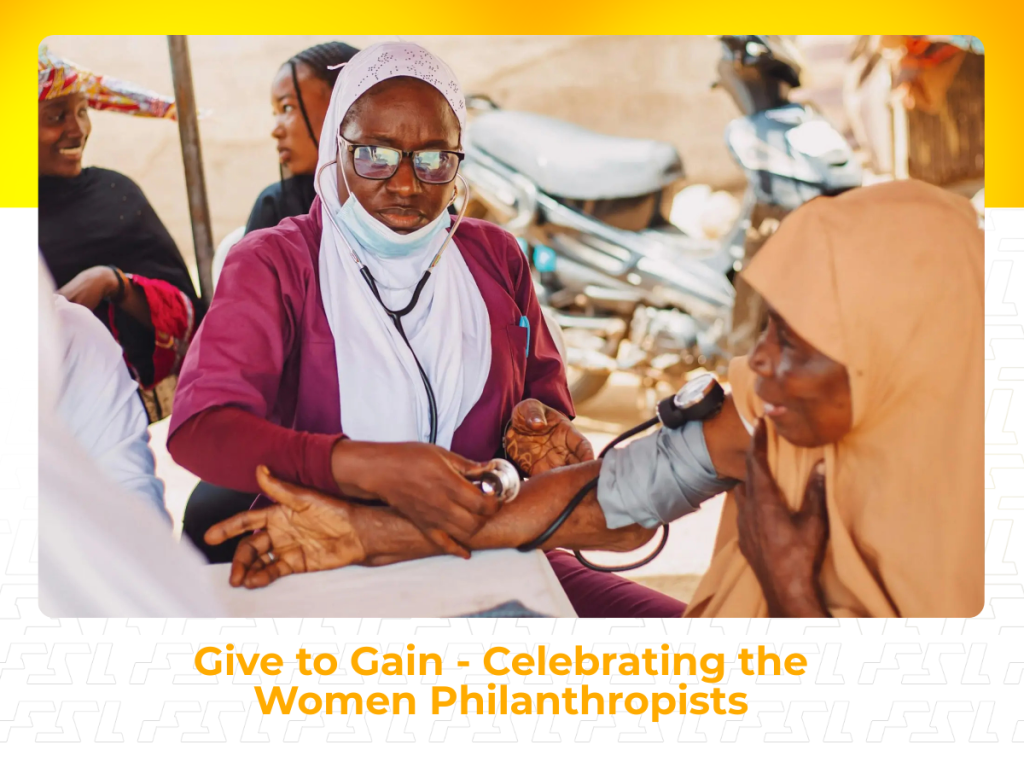
Welcome to the March 2026 edition of our Malaudu Thawah newsletter.
Throughout the month of March, a shared theme echoes across borders: the celebration of women and womanhood; women’s leadership, resilience, innovation, and enduring influence across generations.
Globally, the 8th day of March is observed as International Women’s Day (IWD), a moment not only of celebration but of reflection and renewed commitment. The 2026 theme “Give to Gain” reframes Women’s influence and commitment through reciprocity.
As we mark this year’s International Women’s Day, we honour a truth that Islamic history has always known: some of the most transformative acts of generosity, financial courage, and enduring legacy have been authored by women.
The call-card ‘Women Who Give to Gain’ is not a modern slogan; it is a description of women whose giving built mosques, financed prophecy, and whose sadaqah jariyah continues to ripple forward across centuries.
Women Who Gave and Gained.
Islamic history is rich with women who deployed their wealth not merely as an act of charity, but as a deliberate, faith-driven investment in the community, the ummah, and their own eternal account. These women did not wait for permission to give; they led.
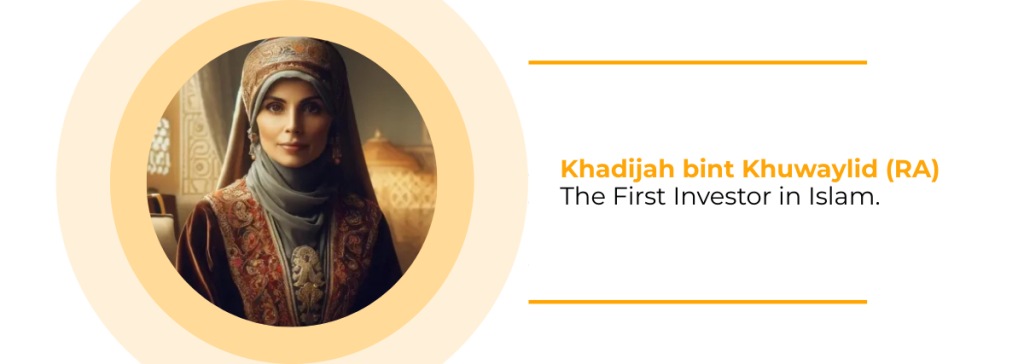
Khadijah bint Khuwaylid (RA).
The First Investor in Islam.
The first wife of Prophet Muhammad (SAW), the first person to embrace Islam, and a revered “Mother of the Believers”. Before revelation descended, before mosques were built, and before a single convert uttered the shahada, there was Khadijah. A woman of remarkable business acumen, she was one of the most successful merchants in Makkah, employing agents across trade routes and commanding respect in a society that rarely afforded such standing to anyone, let alone a woman. When the Prophet Muhammad (SAW) received the first revelation and returned trembling to his home, it was Khadijah who steadied him, believed him without hesitation, and immediately committed her vast resources, her wealth, her networks, her social capital entirely to the mission of Islam. She was the first Muslim. She was also Islam’s first financial backer.
She believed in me when others disbelieved. She supported me with her wealth when others withheld.” — Prophet Muhammad (SAW).
Khadijah’s estate planning was not conducted through legal documents, but her example teaches us everything about intentional generosity. She did not wait until death to give; she gave completely, during her lifetime, as a conscious act of ibadah. She is the archetype of what we now call hiba: a voluntary gift, offered with full mental capacity and absolute sincerity, relinquishing all personal benefit in service of a greater purpose.
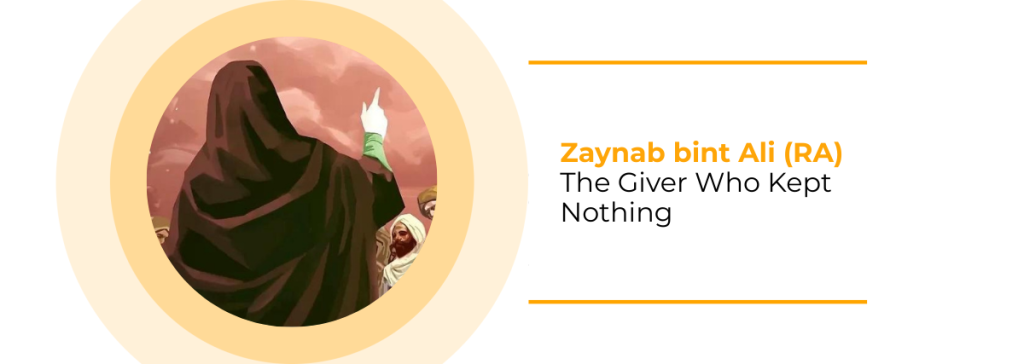
Zaynab bint Ali (RA).
The Giver Who Kept Nothing.
The granddaughter of the Prophet (SAW), Zaynab, was known for a generosity so total that she routinely gave away everything she had, clothes, food, and personal belongings to those in need. She was called ‘Umm al-Masa’ib’, Mother of Calamities, having survived tragedy upon tragedy, yet her response to personal suffering was always greater generosity.
Zaynab’s giving was not structured through legal instruments; it was visceral, immediate, and total. She reminds us that estate planning must ultimately be rooted in a spirit, not just a structure. The documents, the trusts, the waqf deeds, all of these are tools. The spirit that animates them must be Zaynab’s: a willingness to give so completely that nothing is held back from those who need it.
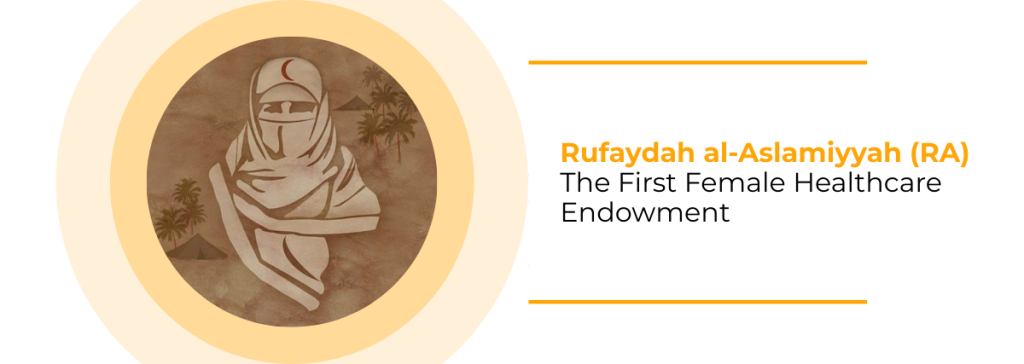
Rufaydah al-Aslamiyyah (RA).
The First Female Healthcare Endowment
Rufaydah al-Aslamiyyah is recognised as the first nurse in Islam, but she was also, effectively, the first woman to establish a charitable healthcare endowment in Muslim history. She pitched her own tent near the mosque in Madinah and dedicated her skills, her resources, and her time to caring for the wounded, seeking neither payment nor recognition, but the pleasure of Allah.
She trained other women in nursing and medical care, creating a human infrastructure of charitable service. In modern terms, she created a waqf of knowledge and skills, an endowment of human capital. Her legacy reminds us that waqf is not limited to land and money. It includes the deliberate investment of skills, time, and expertise for the benefit of the community.
Sadaqah Jariyah — The Charity That Outlives You
What is Sadaqah Jariyah?
Sadaqah Jariyah means ‘flowing’ or ‘continuous’ charity a form of giving whose benefit does not end with the death of the giver but continues to generate reward (ajr) for their eternal account as long as people continue to benefit from it.
When a person dies, their deeds come to an end, except for three: a continuous charity (sadaqah jariyah), beneficial knowledge, or a righteous child who prays for them.”
— Prophet Muhammad (SAW)
Sadaqah Jariyah is not a legal instrument per se, but a spiritual category that captures the eternal dimension of giving. Any act of giving that creates lasting benefit qualifies: building a mosque, funding a water well in a drought-prone community, establishing a scholarship endowment, planting a tree, or endowing a hospital wing.
The waqf, when structured correctly, is the most powerful legal vehicle for sadaqah jariyah. It ensures that your charity is institutionally protected, professionally managed, and perpetually beneficial, not dependent on the goodwill of individuals or the continuity of any single family.
Conclusion.
One of the core lessons of Ramadan is Taqwa, consciousness of Allah, knowing that every action, public or private, is seen and recorded. The great women of Islam lived this truth with particular intensity.
The women who built Islam’s legacy of giving did not ask what they would lose. They asked what they would leave. Khadijah gave her wealth and gained the title of Mother of the Believers. Zaynab gave everything and gained a name that has never been forgotten. Rufaydah gave her skills and gained a permanent place in the history of Islamic healthcare.
This International Women’s Day, we invite every woman, whether a businesswoman, a trustee, a beneficiary, or a matriarch, to see her financial decisions through the same lens: not merely as legal obligations or tax planning exercises, but as acts of worship that will outlive her.
Structure your trusts, waqf, hiba, and will with sincerity, accountability, transparency, and foresight. Seek a qualified professional and Shariah counsel. And when you give, give to gain not merely in this world, but in the one that endures.
“Indeed, the men who practice charity and the women who practice charity and [they who] have loaned Allah a goodly loan, it will be multiplied for them, and they will have a noble reward.”
— Qur’an 57:18
________________
Fiduciary Services Limited is committed to assisting Muslim clients in aligning their estate and business affairs with Islamic principles. Contact us today to ensure your legacy reflects your faith and values.
Get in touch with one of our professionals today by sending an email to contact@fiduciaryservicesltd.com
Shukran Jazeelan for reading.
Mercy Edukugho-Aminah
mercyaminah@fiduciaryservicesltd.com
+234 803 726 5961